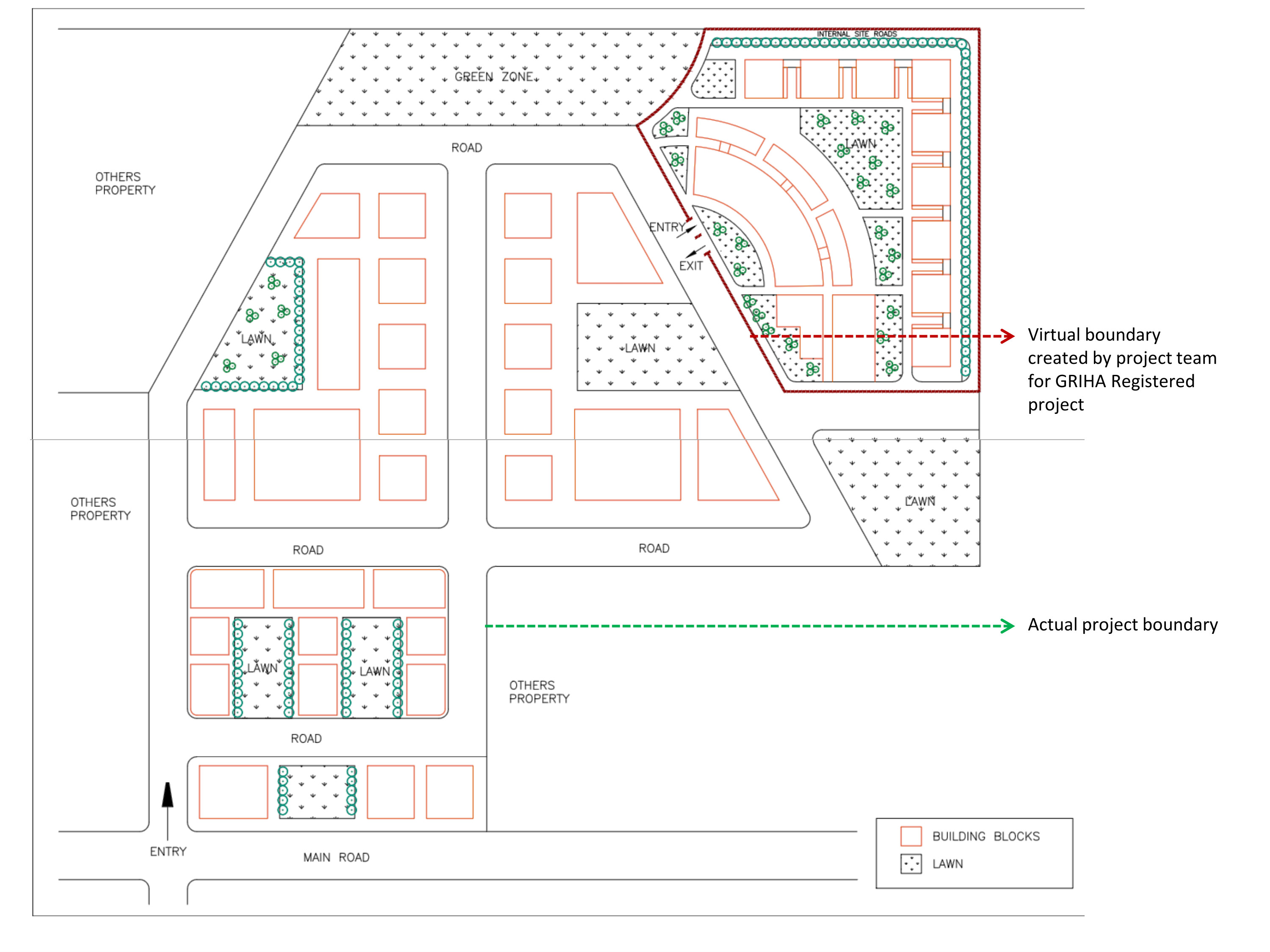
| 1 | Sustainable Site Planning | 1 | Green Infrastructure | Promote site planning that integrates vegetation, permeable surfaces, and natural drainage to enhance ecological value and reduce environmental impact. | 5 | 12 |
| 2 | Low Impact Design | Minimize alterations to the site by retaining natural features, reducing earthwork, and limiting disruption to existing ecosystems. | 5 |
| 3 | Design to Mitigate UHIE | Use shading, reflective materials, and green cover to reduce surface and ambient temperatures, mitigating the Urban Heat Island Effect. | 2 |
| 2 | Construction Management | 4 | Air and Soil Pollution Control | Implement dust suppression, soil erosion prevention, and pollution control measures during construction. | 1 | 4 |
| 5 | Topsoil Preservation | Conserve and reuse fertile topsoil for landscaping and site restoration after construction. | 1 |
| 6 | Construction Management Practices | Adopt sustainable construction practices, including waste minimization, material storage, and worker safety. | 2 |
| 3 | Energy Efficiency | 7 | Energy Optimization | Optimize building energy use through passive design, efficient systems, and performance simulation. | 12 | 18 |
| 8 | Renewable Energy Utilization | Integrate on-site or off-site renewable energy sources to meet part of the building’s energy demand. | 5 |
| 9 | Low ODP and GWP Materials | Use insulation, refrigerants, and other materials with low ozone depletion and global warming potential. | 1 |
| 4 | Occupant Comfort | 10 | Visual Comfort | Ensure adequate natural daylight, glare control, and quality views for building occupants. | 4 | 12 |
| 11 | Thermal and Acoustic Comfort | Maintain comfortable indoor temperature and sound levels through effective design and systems | 1 |
| 2 | Maintaining Good IAQ | Ensure healthy indoor air quality through ventilation, pollutant control, and material selection. | 6 |
| 5 | Water Management | 13 | Water Demand Reduction | Reduce potable water demand through low-flow fixtures, water-efficient landscaping, and reuse. | 3 | 16 |
| 14 | Wastewater Treatment | Treat and reuse wastewater on-site to reduce discharge and freshwater demand. | 3 |
| 15 | Rainwater Management | Harvest and manage rainwater for reuse and aquifer recharge, minimizing surface runoff. | 5 |
| 16 | Water Quality and Self-Sufficiency | Ensure safe water quality and promote self-sufficiency through alternate sources like rainwater and treated wastewater. | 5 |
| 6 | Solid Waste Management | 17 | Waste Management – Post Occupancy | Provide infrastructure for segregation, collection, and disposal of waste after occupancy. | 4 | 6 |
| 18 | Organic Waste Treatment On-Site | Treat biodegradable waste within the premises through composting or biogas systems. | 2 |
| 7 | Sustainable Building Materials | 19 | Utilization of Alternative Materials in Building | Use recycled, rapidly renewable, or locally sourced materials to reduce environmental footprint. | 5 | 12 |
| 20 | Reduction in GWP through Life Cycle Assessment | Assess and lower the embodied carbon of materials through life cycle analysis. | 5 |
| 21 | Alternative Materials for External Site Development | Use sustainable materials for pavements, landscaping, and site infrastructure. | 2 |
| 8 | Life Cycle Costing | 22 | Life Cycle Cost Analysis | Evaluate project costs over its life span to ensure economic sustainability and performance efficiency. | 5 | 5 |
| 9 | Safety and Sanitation for Construction Workers | 23 | Water Demand Reduction | Provide safe working conditions, sanitation facilities, and welfare measures for workers. | 1 | 18 |
| 24 | Universal Accessibility | Ensure barrier-free access for persons with disabilities and the elderly. | 2 |
| 25 | Dedicated Facilities for Service Staff | Provide appropriate facilities for maintenance and service staff within the project. | 2 |
| 26 | Positive Social Impact | Implement measures that benefit local communities, such as employment or shared infrastructure. | 3 |
| 10 | Performance Metering and Monitoring | 27 | Commissioning for Final Rating | Verify and optimize building systems before occupancy to ensure design intent is met. | 7 | 7 |
| 28 | Smart Metering and Monitoring | Install smart systems to monitor and manage building energy and water usage. | 0 |
| 29 | Operation and Maintenance Protocol | Develop protocols for effective operation, maintenance, and performance tracking. | 0 |
| 11 | Innovation | 27 | Innovation | Reward innovative strategies and technologies that enhance sustainability beyond core criteria. | 5 | 5 |